All work

The Setup

Everything you need before you start pottery — an illustrated field guide to the machines that do the work.

Discipline
Book design, illustration
Format
200 × 200 mm, facing pages
Tools
Procreate, InDesign
Typefaces
Veteran Typewriter, Caveat
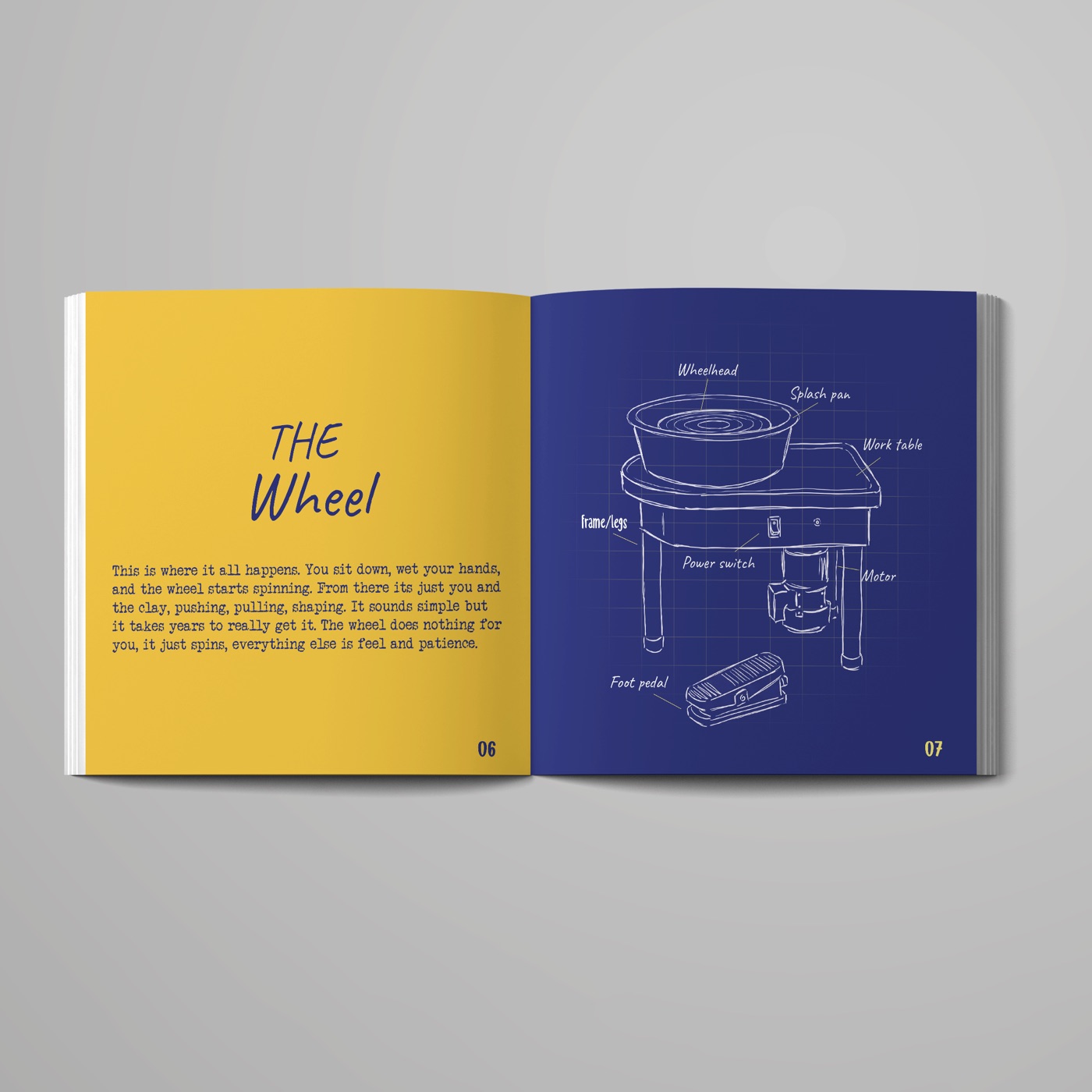
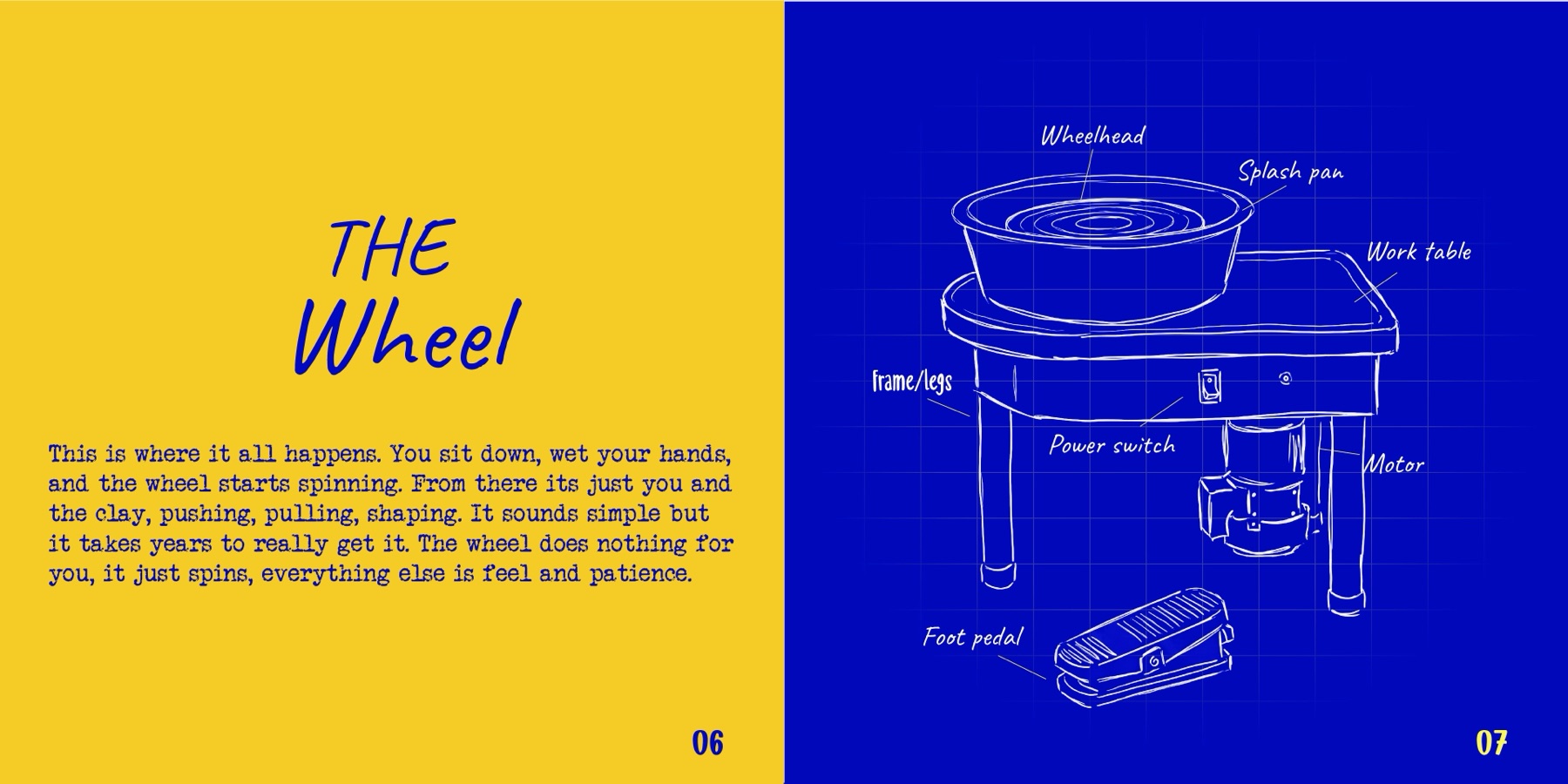
The printed book lying open at the chapter on the wheel: a yellow text page facing a blueprint diagram of a potter's wheel with labelled parts.
The Wheel — chapter opener facing its labelled diagram

Overview

The Setup covers the core machinery of the pottery world — the pug mill, the wheel and the kiln. Each machine is treated as a subject worth studying in detail, in the tradition of classic labelled diagram books rather than a catalogue or a manual.

Approach

Every illustration started as a hand-drawn diagram in Procreate on iPad, exported with a transparent background so it could sit cleanly inside the InDesign layout. The visual language draws on Julia Rothman's Anatomy series and David Macaulay's The Way Things Work — both books that turn technical subjects into something visually inviting rather than intimidating.

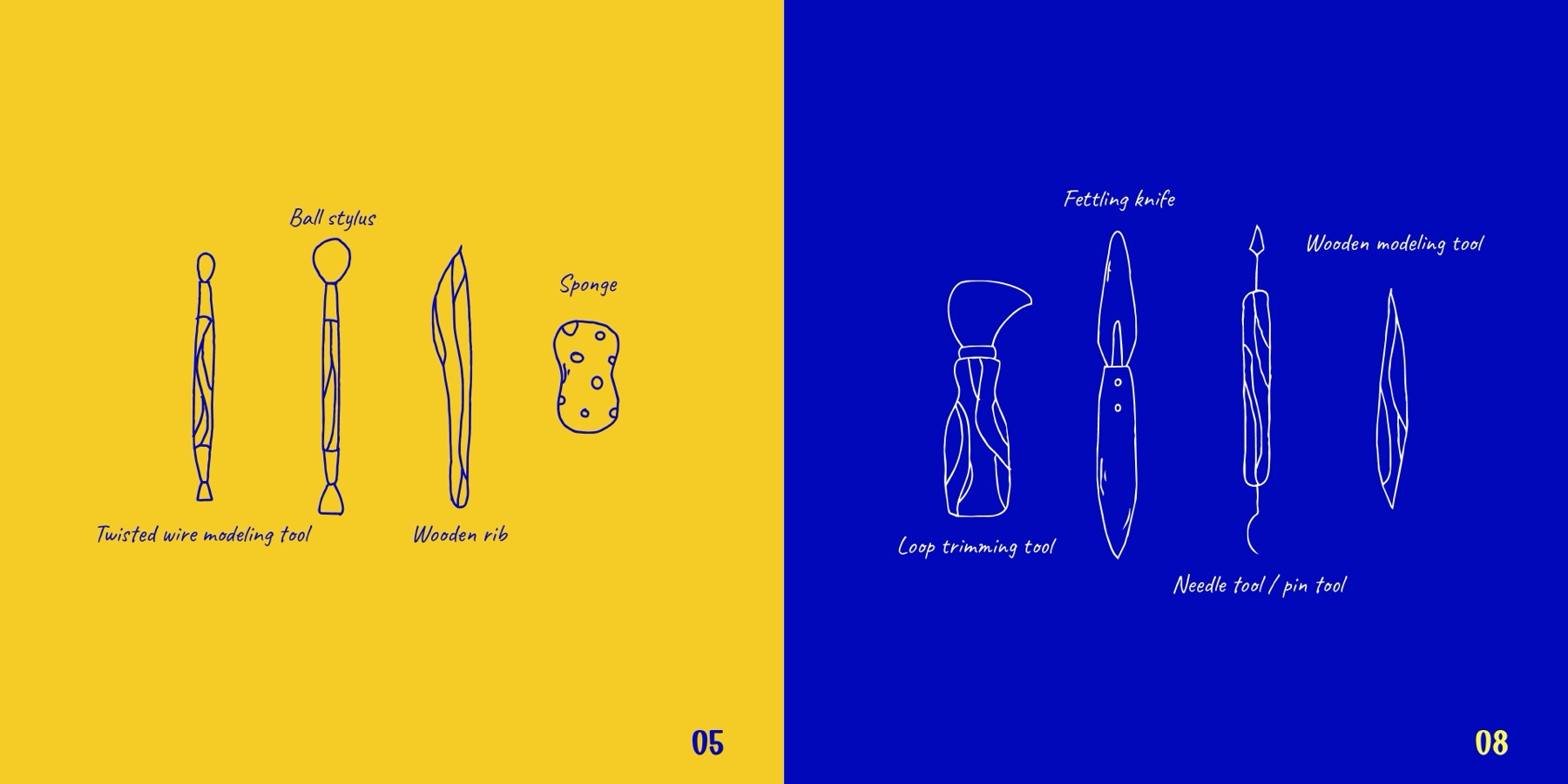
The tools themselves became structural. Loop trimming tool, fettling knife, needle tool, wooden rib, sponge — rather than sitting on the page as flat reference images, they are used as silhouettes, negative space and cross-sections woven into the page structure.

“Patience is the only tool that cannot be left on the bench.” Page 01

In hand
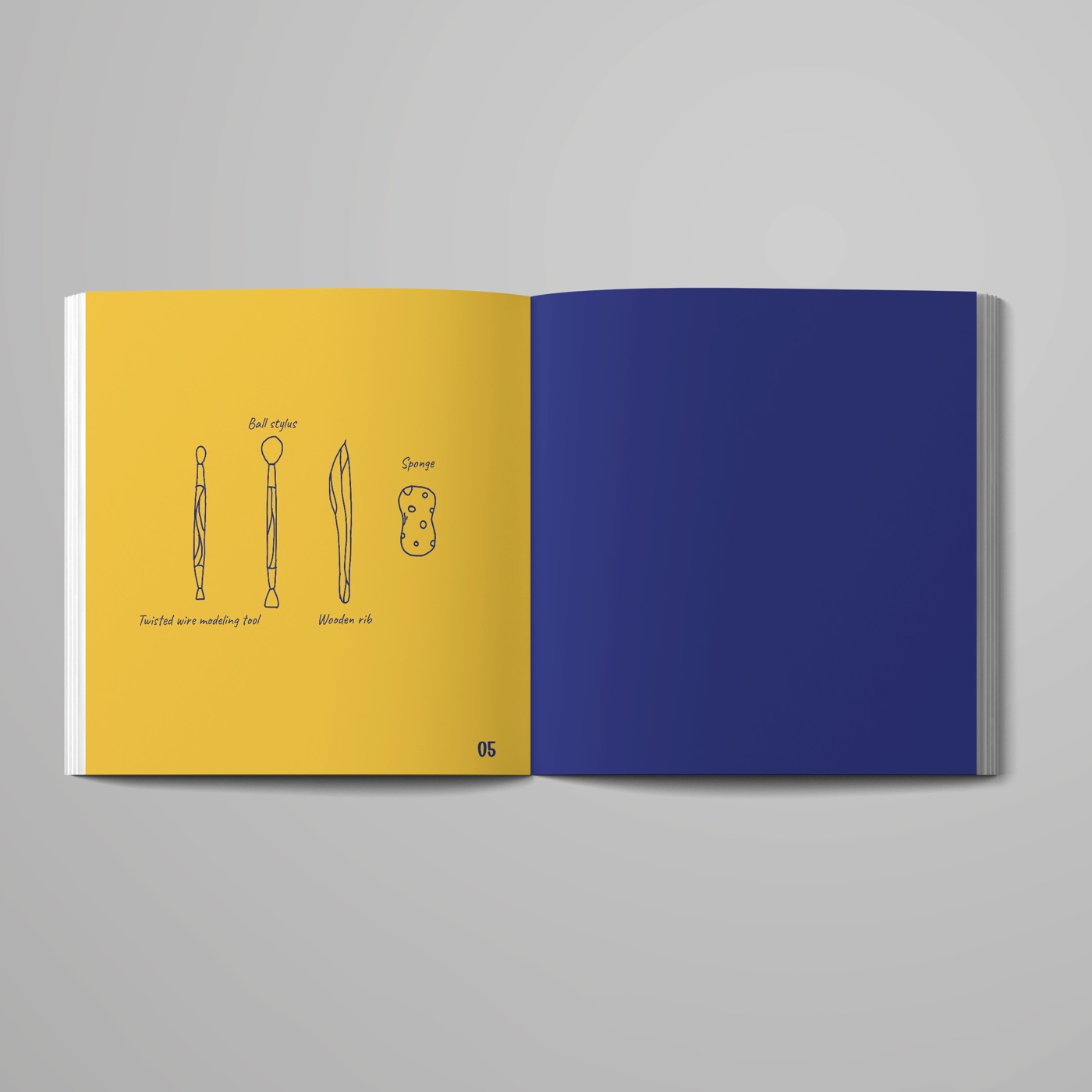
The printed book open at page 05: hand-drawn tool plates labelled on a yellow page, facing a solid blue page.
Tool plates, bound
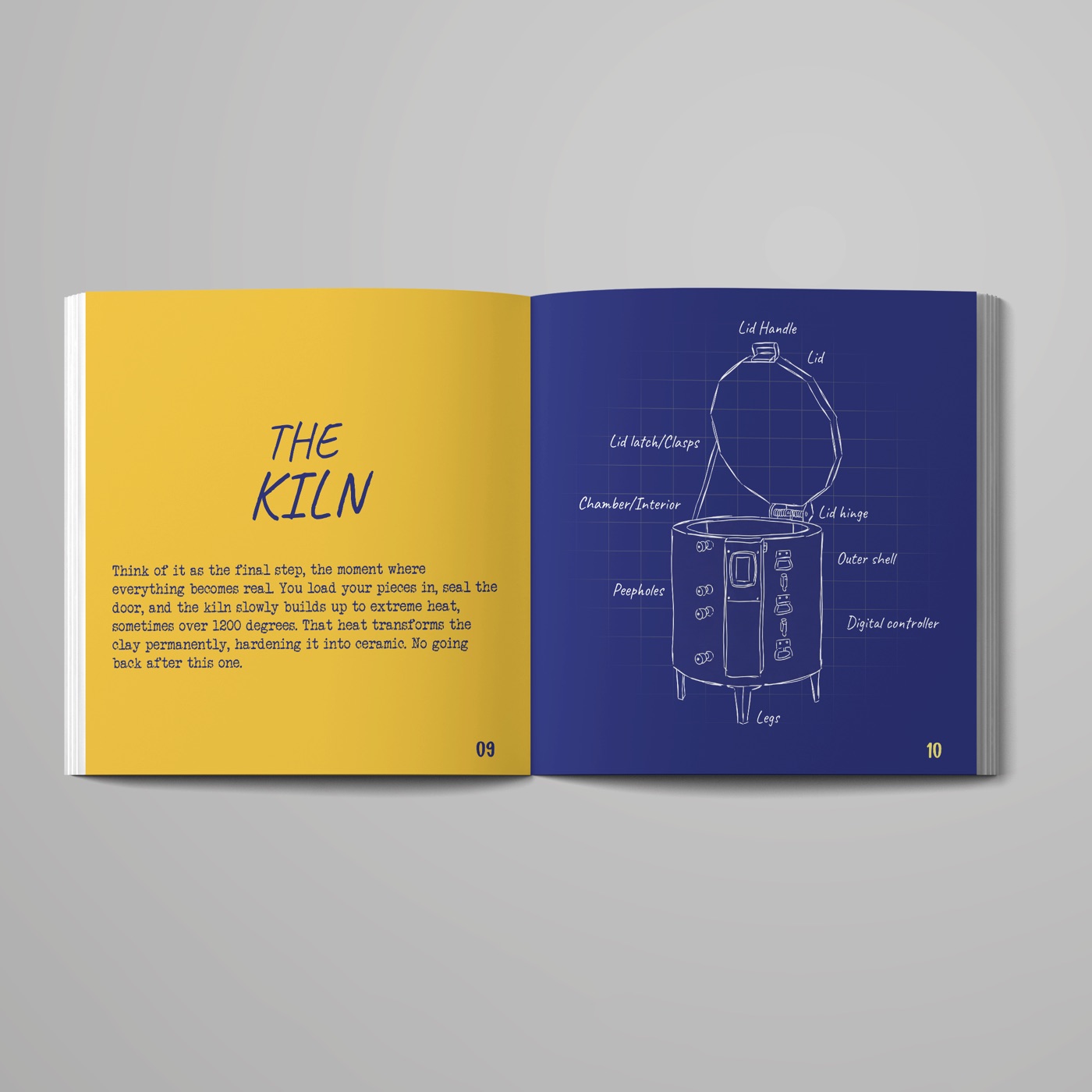
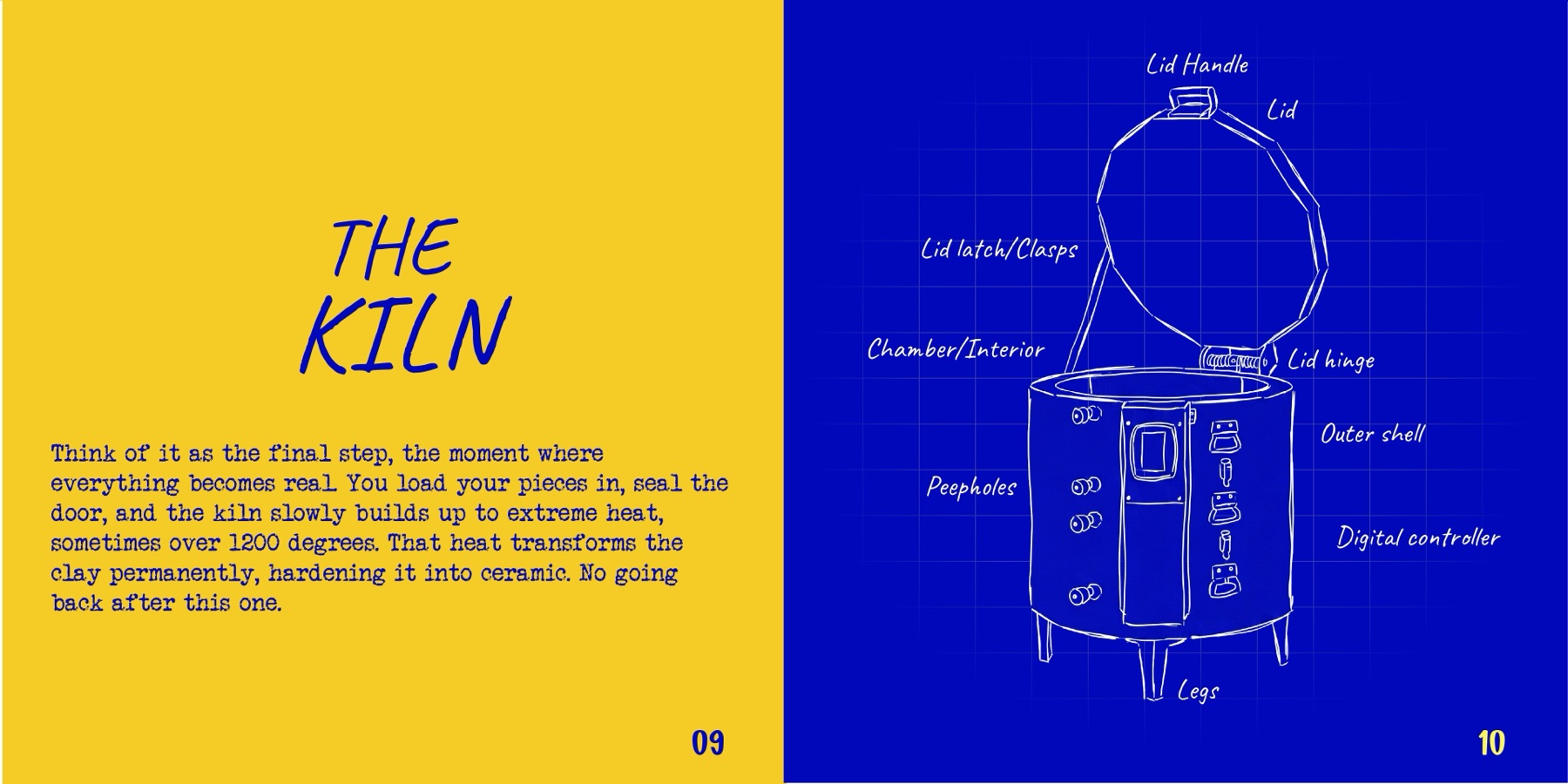
The printed book open at The Kiln: a yellow chapter page facing a blueprint diagram of a kiln with every part labelled.
The Kiln, bound
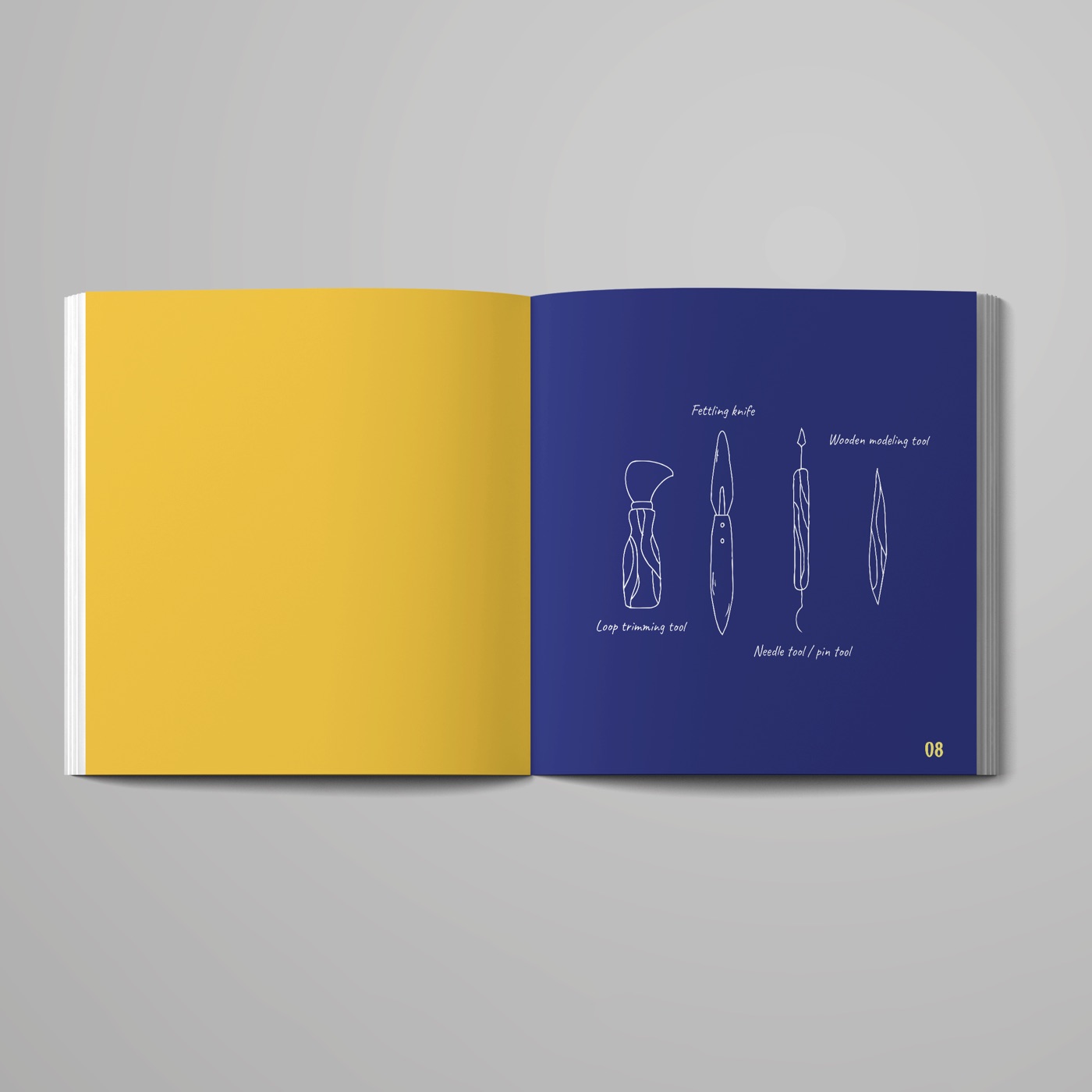
The printed book open at page 08: a blank yellow page facing blue tool reference drawings with handwritten labels.
Tool reference, bound

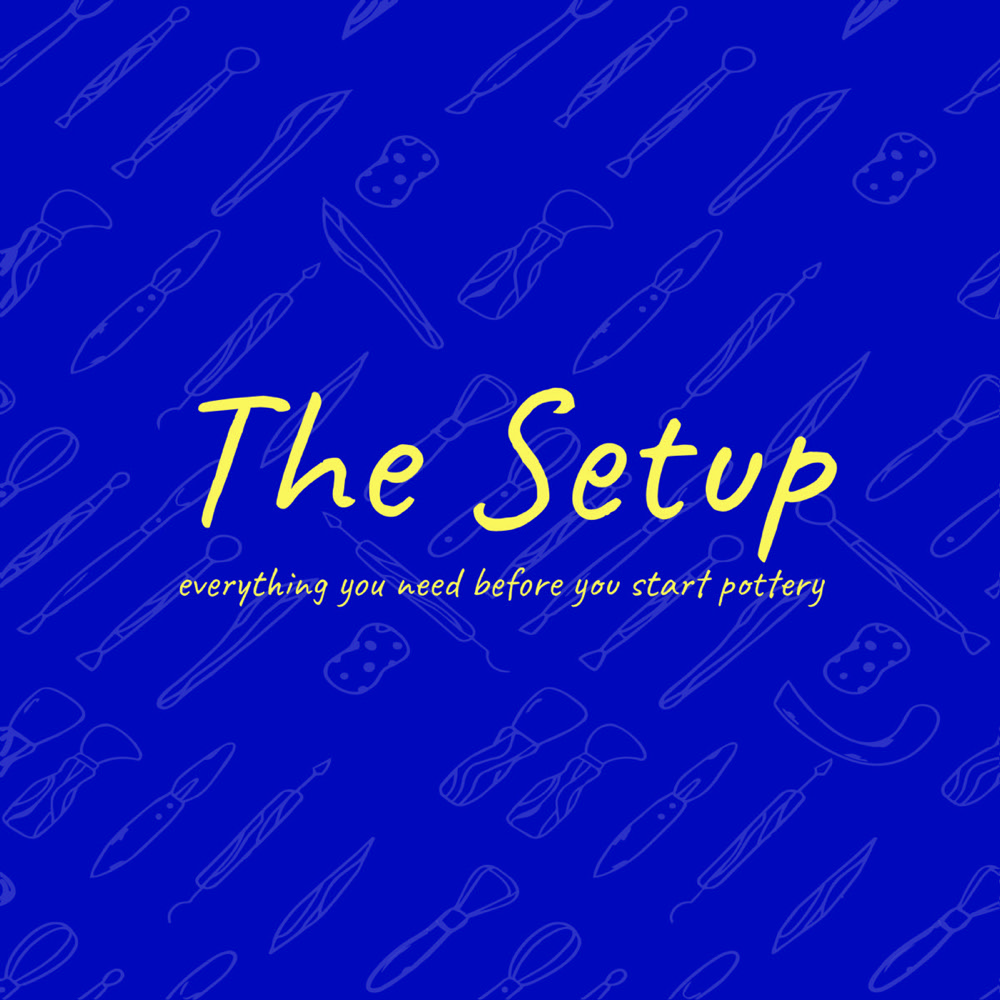
Front cover

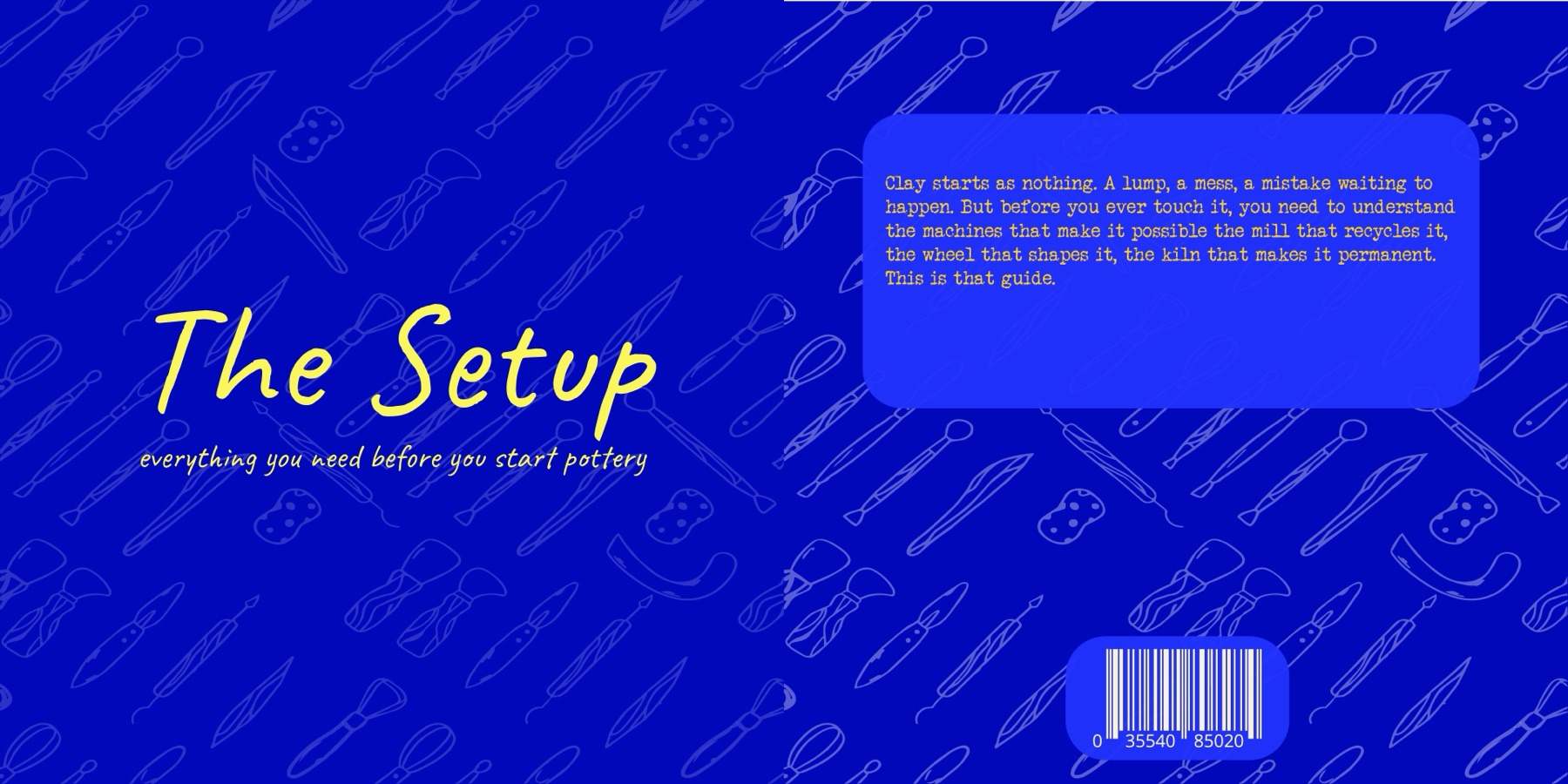
The Setup cover: yellow handwritten title on an electric indigo ground patterned with outlined pottery tools.
Cover — tool silhouettes at 8% opacity build the ground pattern

Spreads

Opening spread: a typewriter-set epigraph reading “Patience is the only tool that cannot be left on the bench” on yellow, facing a blue index listing Pug Mill 03, Wheel 07 and Kiln 10.
01 — Epigraph and index
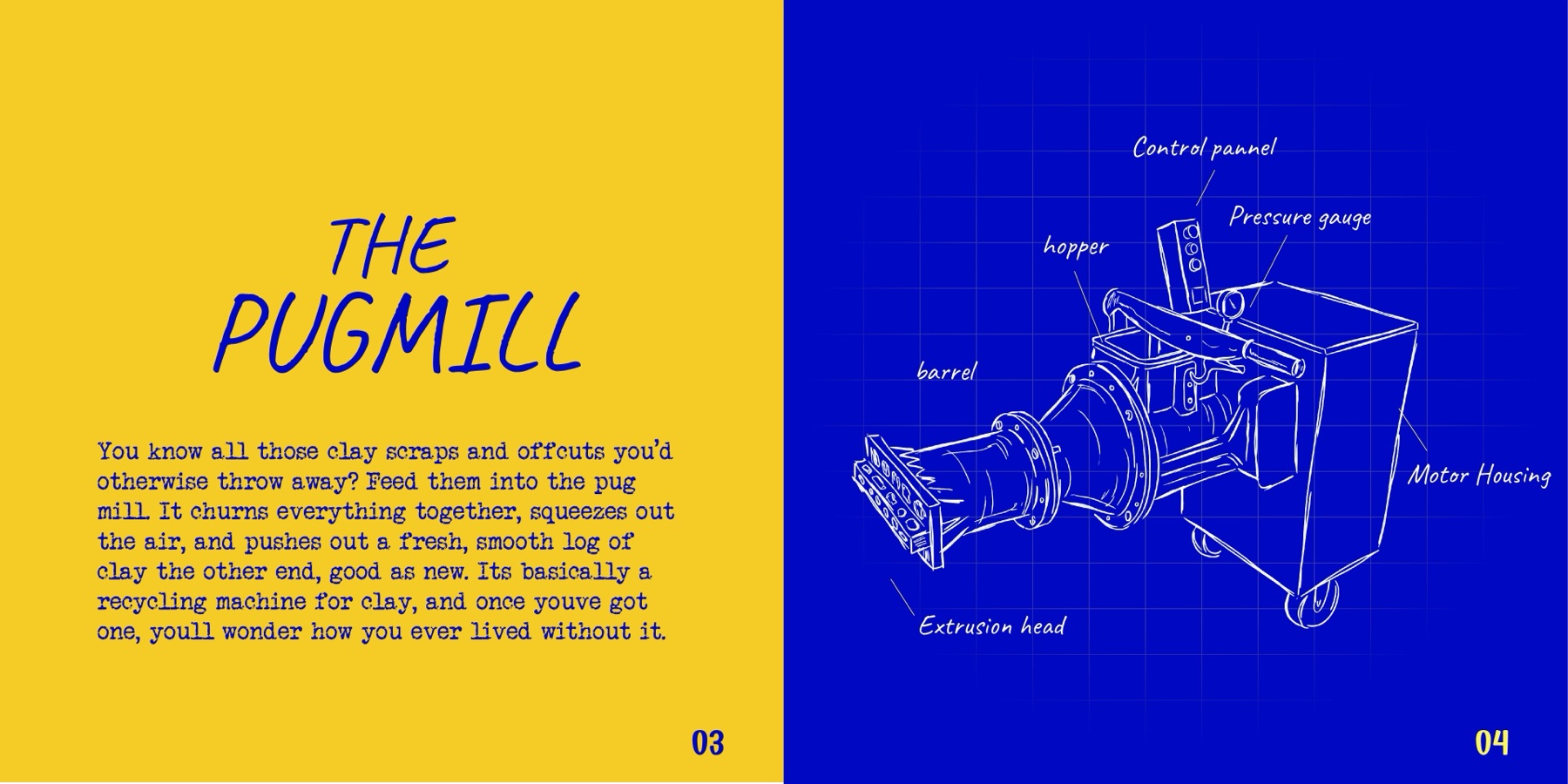
The Pug Mill chapter: a yellow page explaining how the machine recycles clay offcuts, facing a blueprint diagram labelling the hopper, barrel, pressure gauge, extrusion head and motor housing.
02 — The Pug Mill
Tool plates: hand-drawn twisted wire modelling tool, ball stylus, wooden rib and sponge on yellow, facing a loop trimming tool, fettling knife, needle tool and wooden modelling tool on blue.
03 — Tool plates, pages 05 and 08
The Wheel chapter: a yellow page on feel and patience at the wheel, facing a blueprint diagram labelling the wheelhead, splash pan, work table, power switch, motor and foot pedal.
04 — The Wheel, pages 06–07
The Kiln chapter: a yellow page describing firing above 1200 degrees, facing a blueprint diagram labelling the lid handle, lid hinge, chamber interior, peepholes, outer shell, digital controller and legs.
05 — The Kiln, pages 09–10
The cover laid flat: the back carries the book's blurb and a barcode, the front the handwritten title The Setup, both over a pattern of outlined pottery tools.
06 — Cover, flat: back and front

Details

The book is built at a square 200 × 200 mm format across facing pages, each spread pairing a chapter opener against a full explanation and labelled part sketches. The palette moved through two distinct phases: an early navy-and-Didot combination, then the final deep indigo and yellow system set in Veteran Typewriter and Caveat.

The blueprint register — white line on dark blue — gives the tools a technical, almost architectural presence on the page rather than a decorative one. A presentation deck backs the book, walking through concept, process and typography for a professor review.

Next project Karel Martens Stationery Continue